Tracking Nationwide Parking with the SIPARK Platform
How we built the frontend for a platform that tracks every parking spot, lot, and garage across Slovenia.
Client
Slovenian Ministry of the Environment, Climate, and Energy
Partner
Inova IT
Our Role
Frontend Architecture & Development
Tech Stack
Industry
Smart Infrastructure / Government
Project Overview
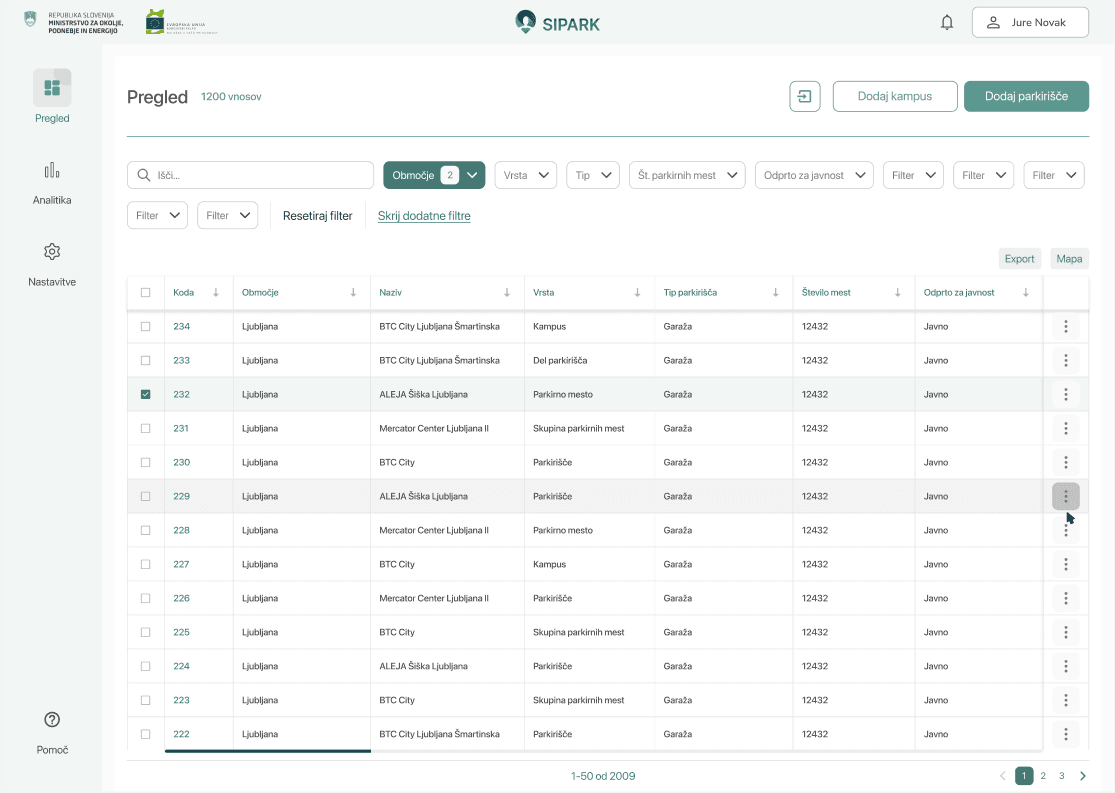
In partnership with Inova IT, we delivered the frontend architecture for SIPARK — a platform for the Slovenian Ministry of the Environment, Climate, and Energy. The platform tracks and visualizes parking spots, lots, and garages across Slovenia.
It provides actionable data to optimize urban planning, reduce traffic congestion, and support environmental sustainability initiatives. Our focus was entirely on the frontend: building an interactive, map-driven interface that government managers and city planners could use daily.
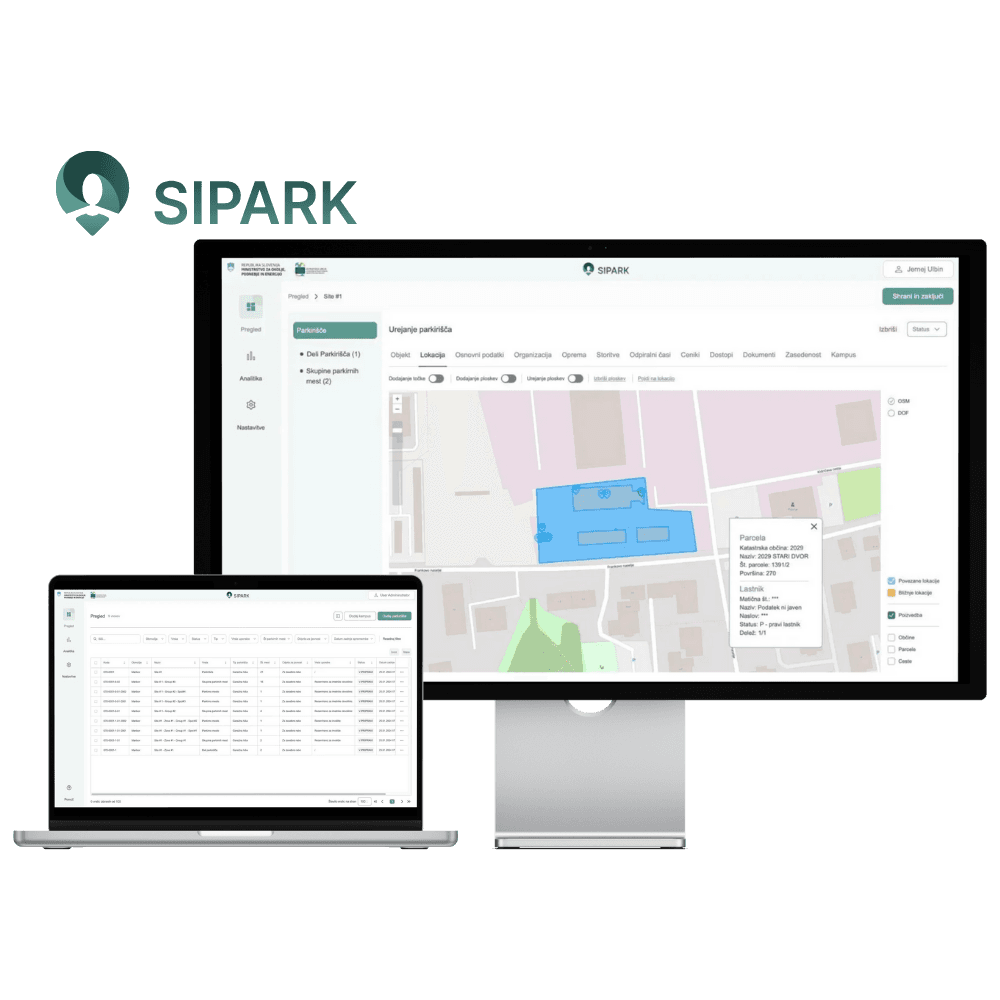
The SIPARK platform dashboard — centralized parking data for the entire country.
Frontend Challenges We Overcame
Building a nationwide spatial data platform isn't a standard frontend job. Here are the specific technical challenges we solved.
Technical Challenge
Displaying Complex, Nested Hierarchies
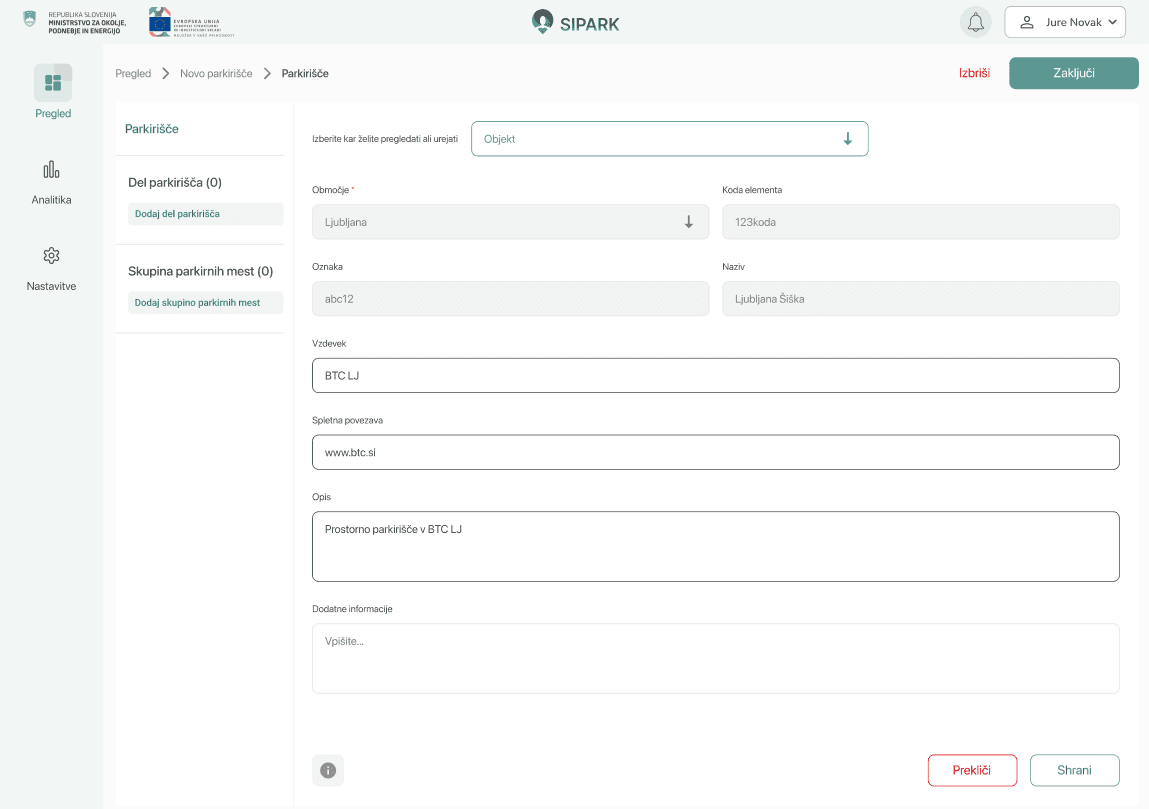
The platform required tracking a recursively nested array of facilities — specific parking spots → within a parking region → within a lot → within a garage → within a district. Displaying this data structure clearly was a significant UI challenge.
How we solved it:
We developed custom, recursive UI components with clear hierarchical views and grouping controls. Users can drill into specific details or zoom out for a broader overview without interface clutter.
Technical Challenge
Creating an Interactive Map Canvas
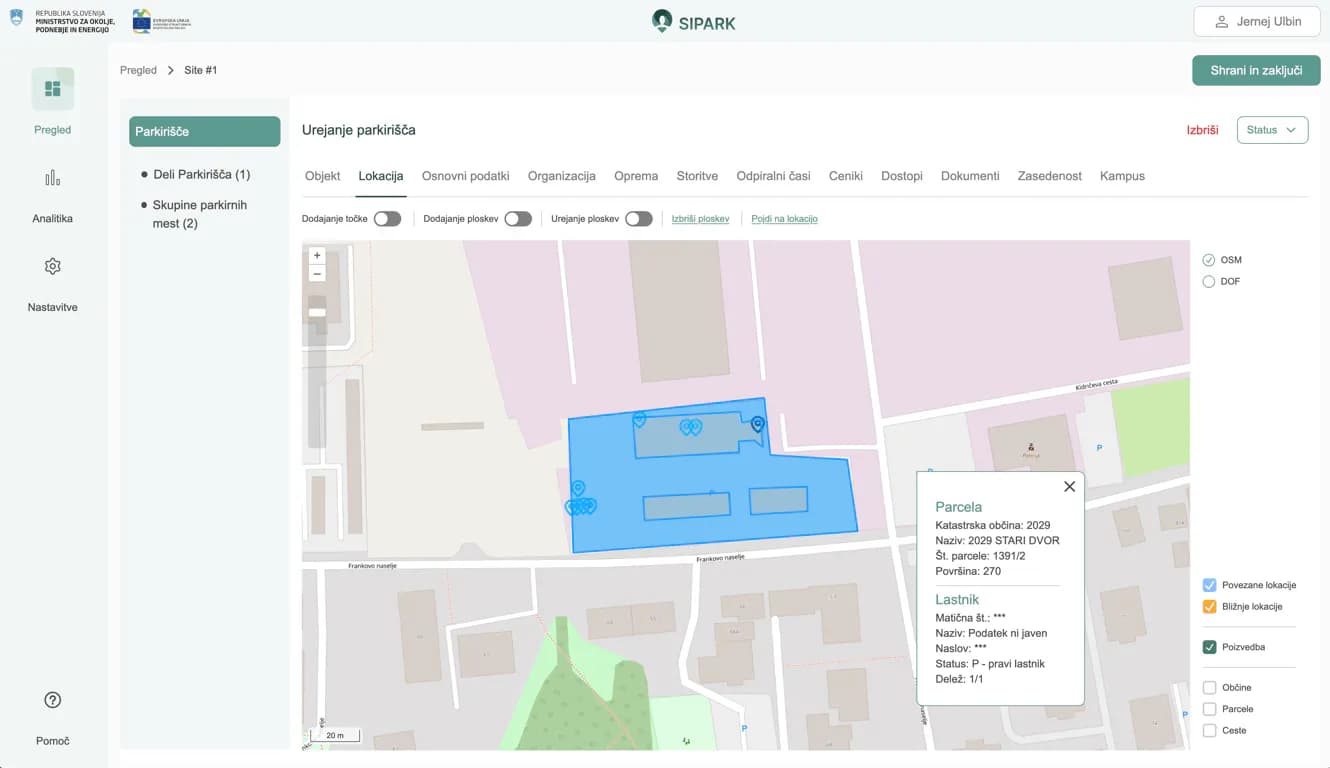
The application required more than a map with static pins. Users needed robust spatial editing capabilities — actively defining and modifying parking areas by drawing directly on the map.
How we solved it:
We utilized OpenLayers to turn the map into a fully interactive canvas. We implemented custom drawing tools that allowed users to draw exact polygons, place markers, and define precise parking boundaries directly on the map, streamlining data entry and spatial management.
Technical Challenge
Multi-Team Synchronization
Working alongside Inova IT's backend developers and Ministry stakeholders required strict technical alignment. API contracts had to be locked down early, and frontend progress couldn't block on backend delivery.
How we solved it:
We established clear Agile workflows using Jira and GitHub, maintained strict API contracts with mock data for parallel development, and held regular sync meetings with the backend team to ensure seamless data integration and a unified final product.
The Results
Here's what the finished platform delivers.
Impact
Data-Driven Decisions
The Ministry now uses the dashboards to make informed decisions regarding infrastructure investments, traffic policy, and urban development priorities.
Impact
Eco-Friendly Impact
Better parking management supports initiatives to lower traffic congestion and reduce carbon emissions through optimized parking allocation and urban flow.
Impact
Future-Ready
The scalable frontend architecture serves as a solid foundation for future smart city integrations — EV charging, bike-sharing, real-time traffic management.
Looking Forward
This project demonstrated that complex, nationwide data sets can be made accessible and manageable through effective frontend engineering and collaborative partnerships.
If your organization is tackling complex data management, mapping challenges, or smart city initiatives, our team can help translate your requirements into functional, intuitive web applications.