WMS + MES + Warehouse Robot Interface for Rotowash
A complete platform covering sales, manufacturing, warehouse management, and a software interface to the warehouse robot — built from the ground up to replace a legacy system.
Client
Rotowash
Scope
Full Solution — BE, FE, Architecture, Integration
Our Role
End-to-End Development
Tech Stack
Industry
Manufacturing / Industrial
Project Overview
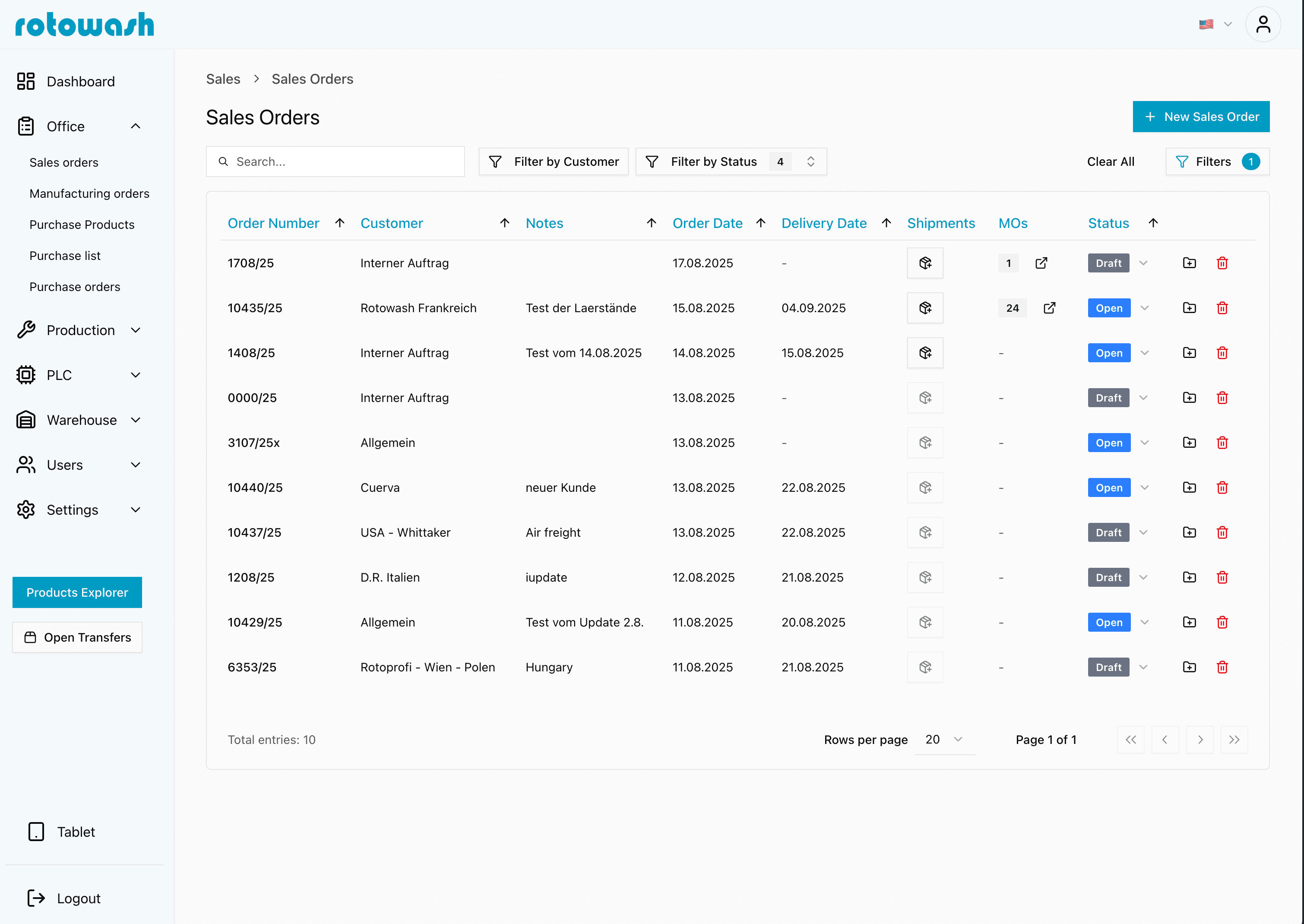
Rotowash, an Austrian manufacturer of industrial cleaning machines, was running on a legacy system that couldn't keep up with their operational complexity. They needed a modern platform that ties together sales, production, warehouse management, and a software interface to the warehouse robot in one place.
We built the entire solution — backend architecture, frontend, database design, robot interface layer, and migration from their legacy system. The platform covers the full lifecycle: from sales orders through manufacturing execution to shipment and warehouse stock management.
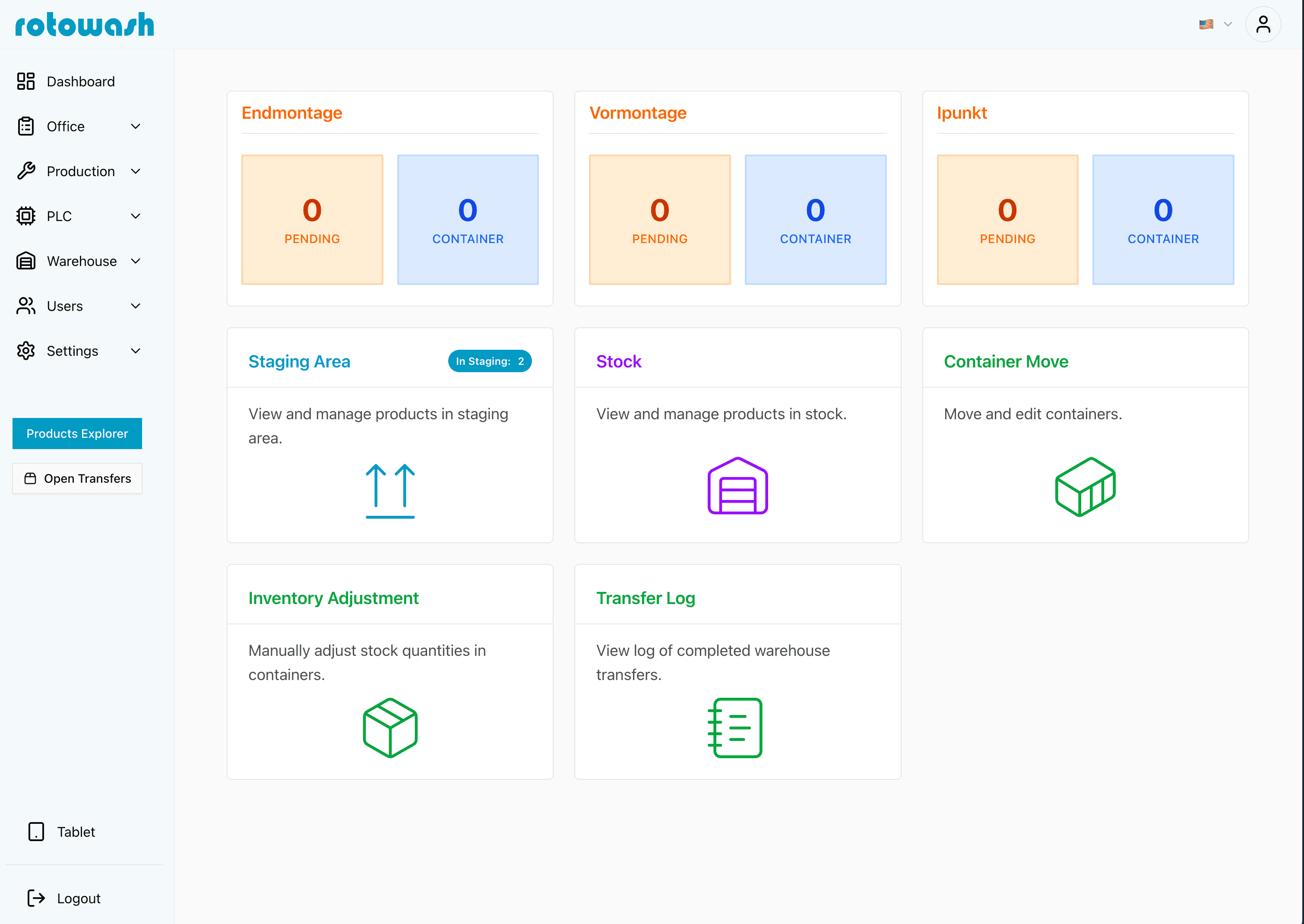
The warehouse dashboard — work stations, staging areas, stock management, and transfer logs at a glance.
Designed from the Ground Up
We didn't just write code on top of an existing schema — we designed the entire database architecture to support Rotowash's operational model.
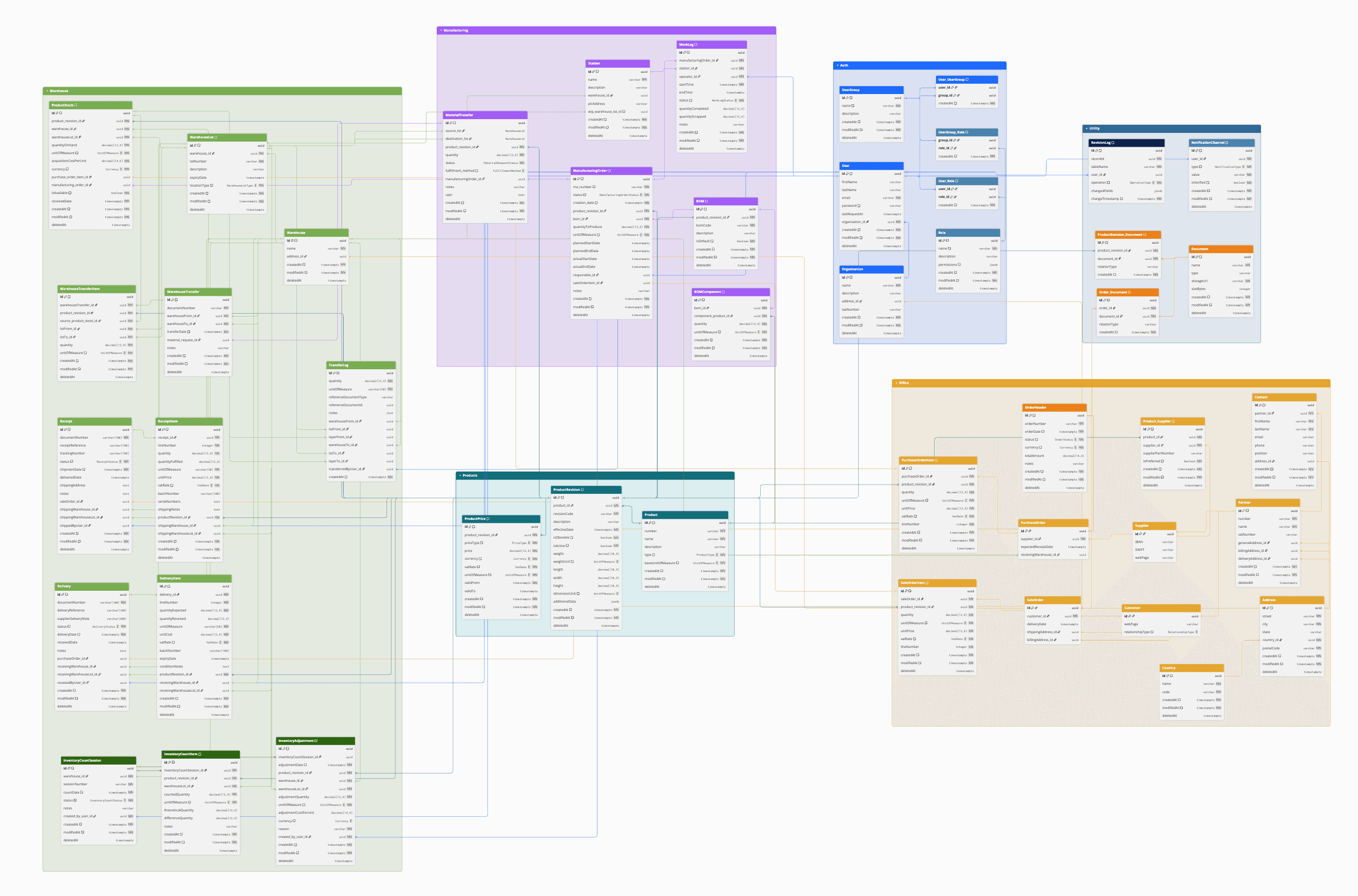
The full database schema — sales, production, warehouse, robot interface, and inventory domains interconnected.
Platform Features
A closer look at the key modules we built.
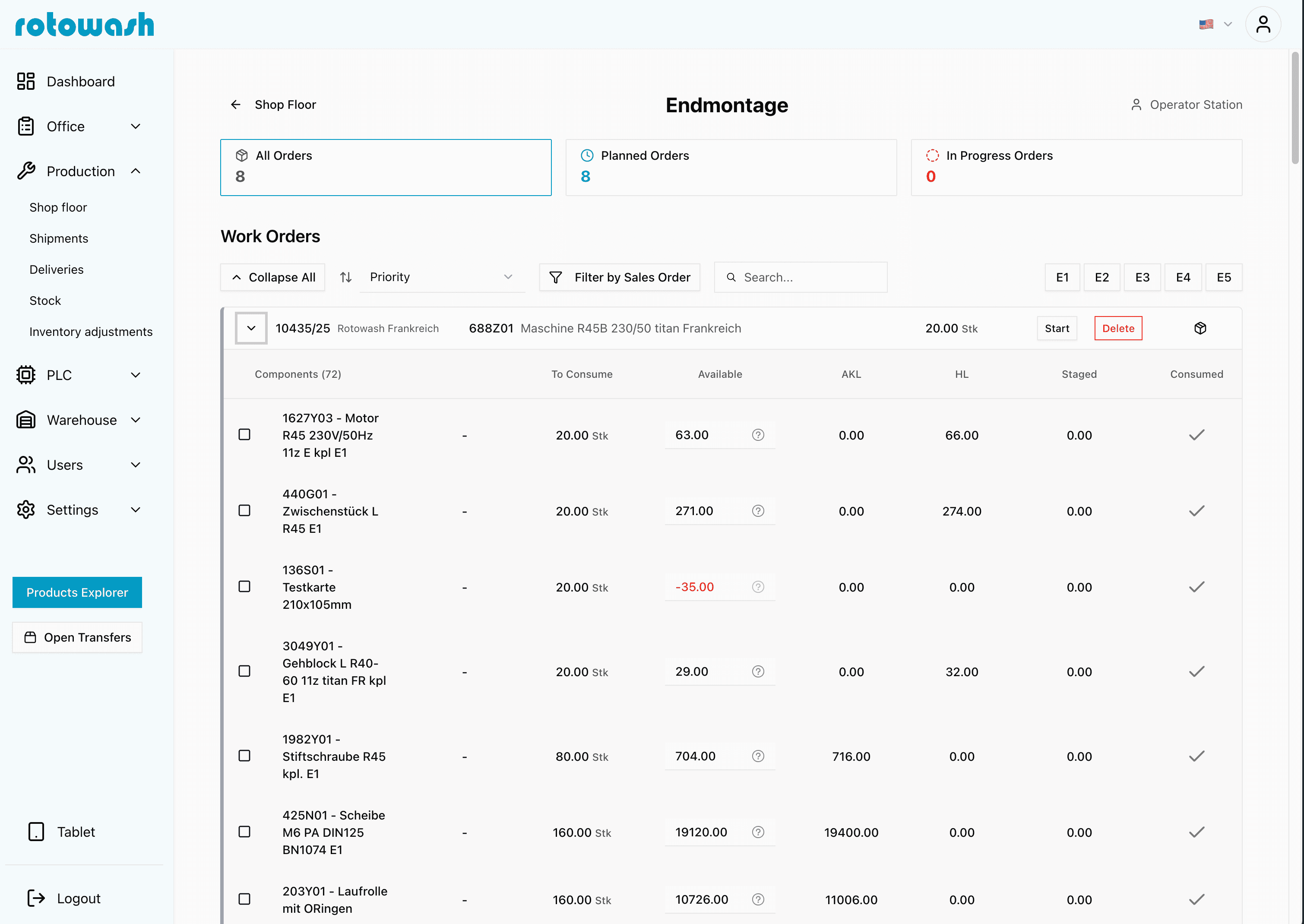
Shop Floor
Operators see their station's work orders with component lists, availability, and consumption tracking. Filter by station (E1–E5) to focus on what's relevant.
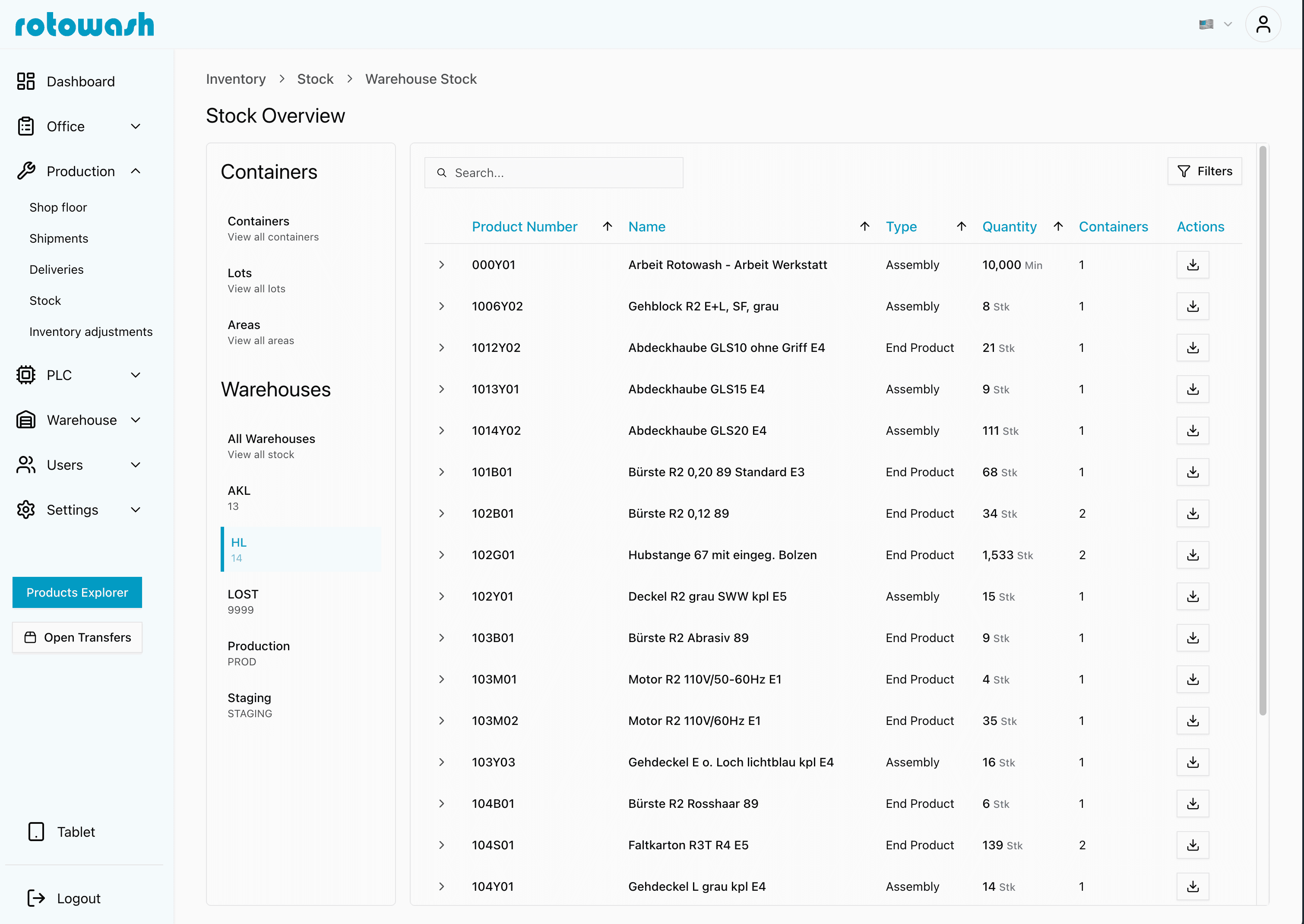
Warehouse Stock
Full inventory view across all containers, lots, areas, and warehouses. Browse by location or search by product number — with quantities and container counts.
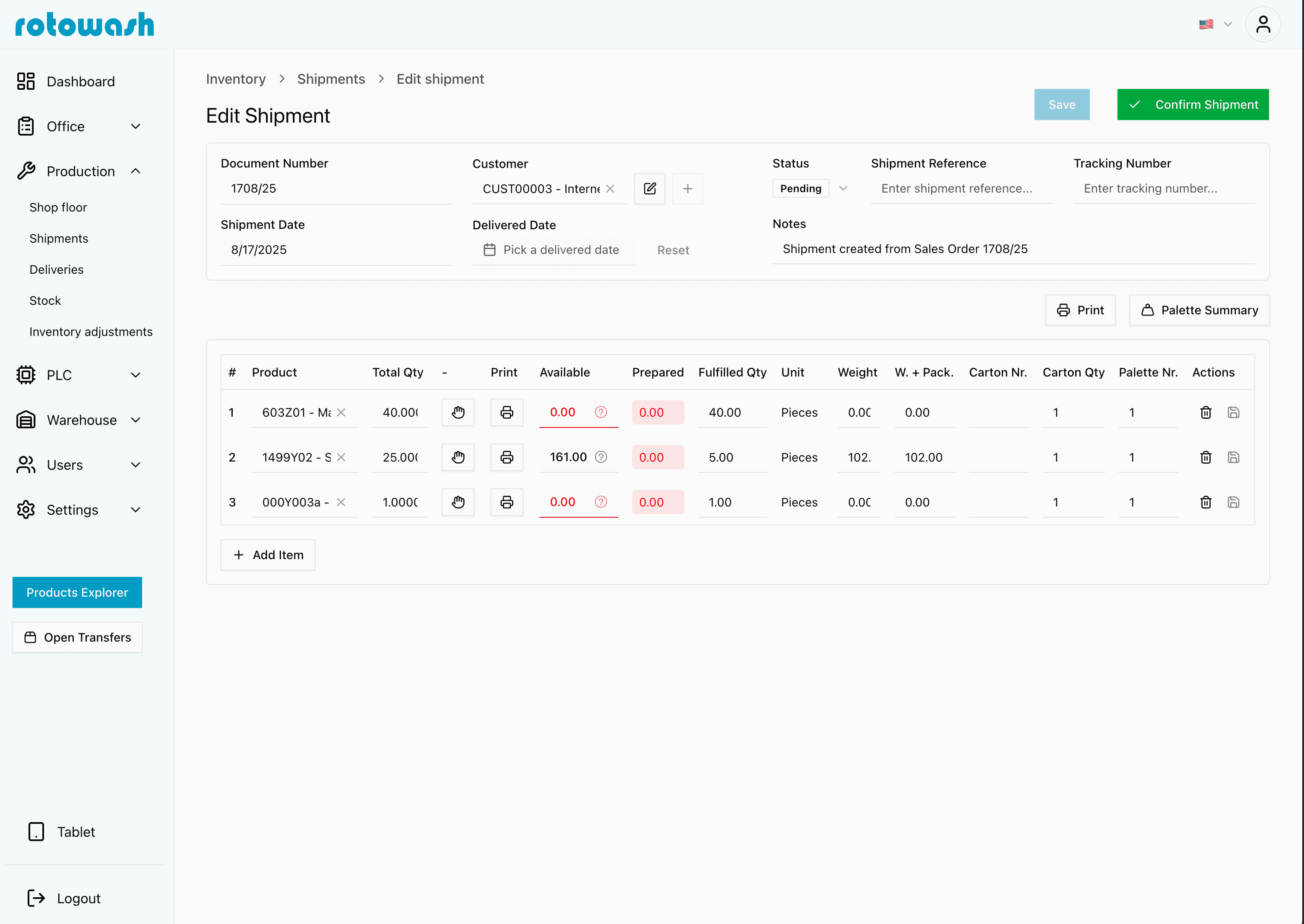
Shipments & Logistics
Manage shipments with line items, packing details, weights, and palette summaries. Print shipping documents directly from the platform.
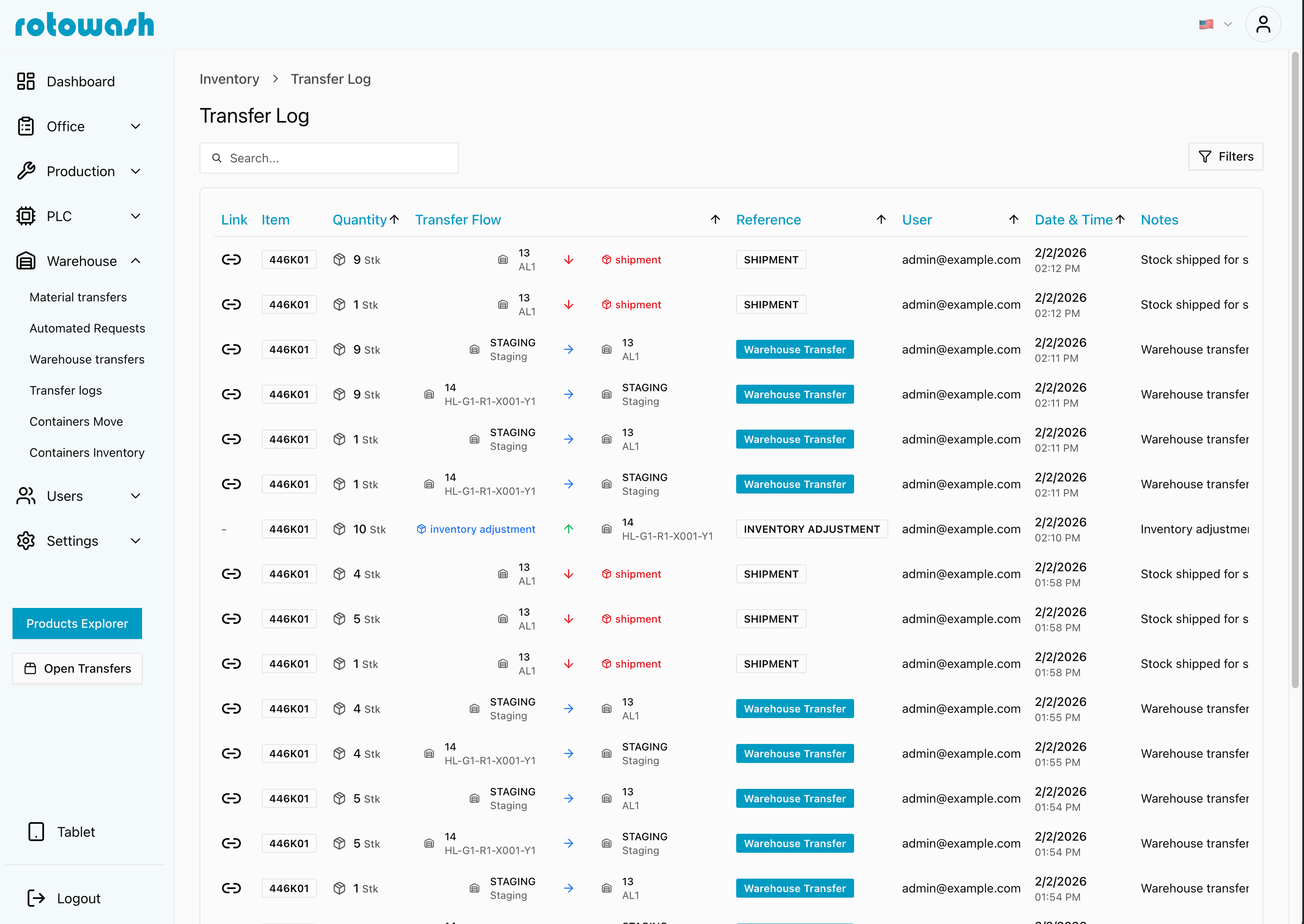
Transfer Log & Traceability
Every material movement is recorded — shipments, warehouse transfers, inventory adjustments. Full audit trail with timestamps, users, and references.
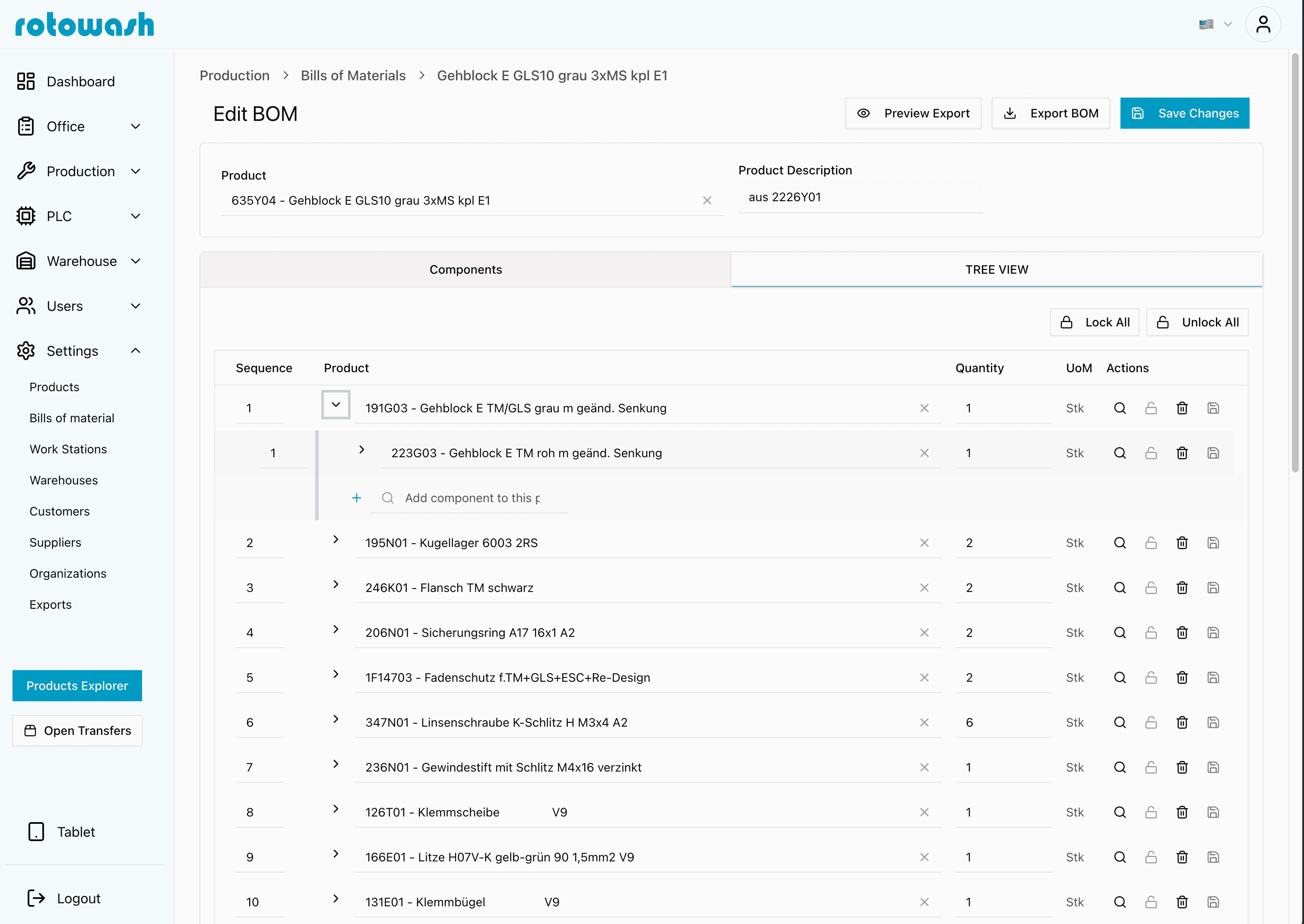
Bills of Materials
Nested BOM editor with component tree views, locking, and export. Manage multi-level assemblies with sub-components and quantities per product revision.
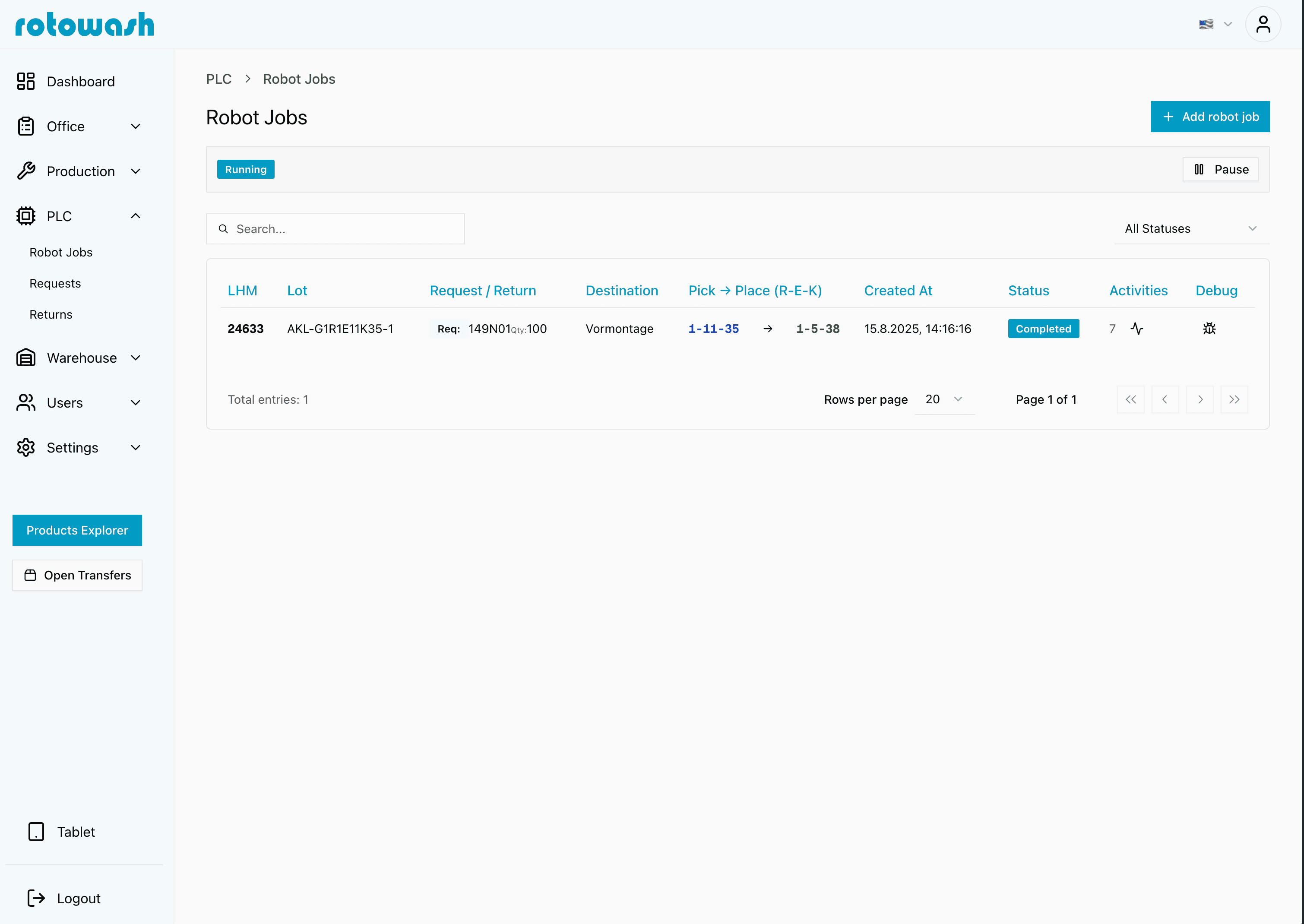
Robot Job Monitoring
Monitor every robot pick-and-place operation — lot locations, destinations, rack coordinates, status, and activity logs. Pause the queue or dispatch jobs manually when needed.
Challenges We Solved
Building an integrated MES + WMS with a robot interface layer from scratch — here's what that looked like.
Technical Challenge
Manufacturing Order Lifecycle
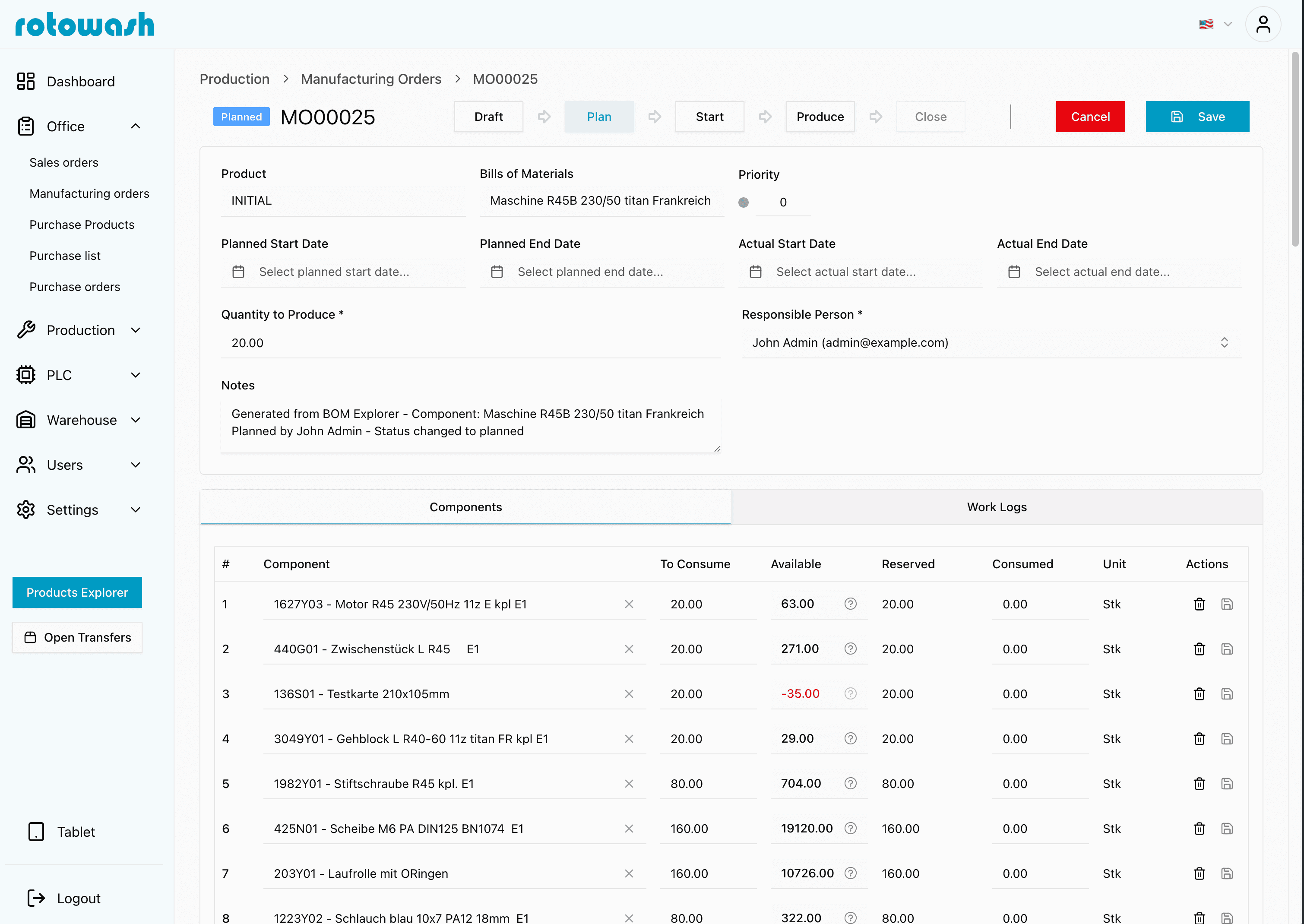
Each manufacturing order moves through a strict workflow — Draft → Planned → Started → Produced → Closed — with component reservations, BOM explosion, and shop floor tracking at every stage. The system needs to enforce state transitions while keeping operators moving fast.
How we solved it:
We built a state-machine-driven backend with clear workflow transitions and a frontend that surfaces the right actions at each stage. Shop floor views show operators exactly what they need: components to consume, quantities, and availability — nothing more.
Technical Challenge
Warehouse Robot Interface
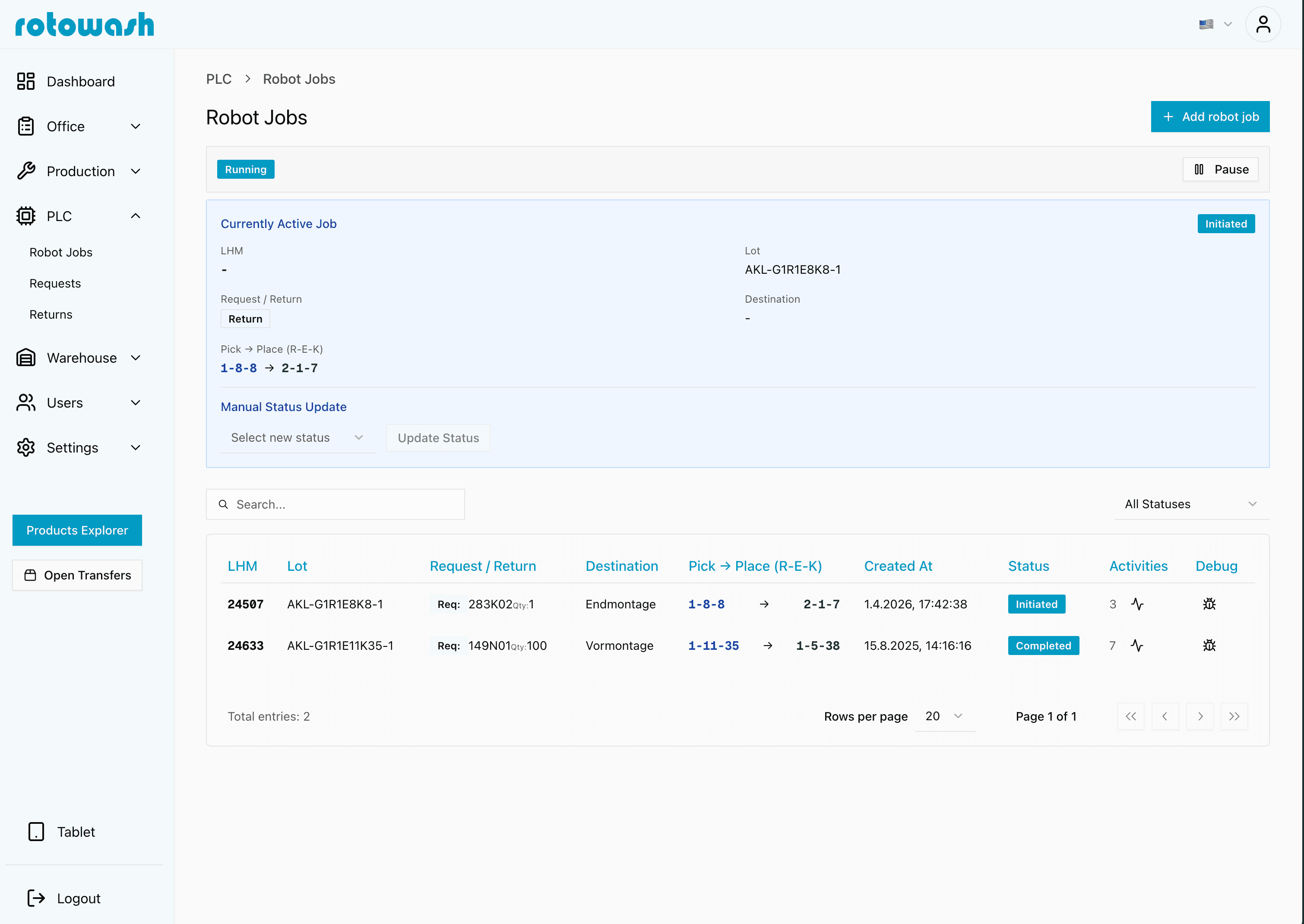
Rotowash operates an automated warehouse robot that picks and places materials. Our platform needed a software interface to dispatch jobs to the robot, track their status, and update inventory based on completed movements.
How we solved it:
We built an interface layer that translates warehouse requests into robot jobs and monitors their execution. Operators can view active and completed jobs, pause the queue, and manually intervene when needed — all while inventory stays in sync automatically.
Technical Challenge
Deep Bills of Materials & Availability Tracking
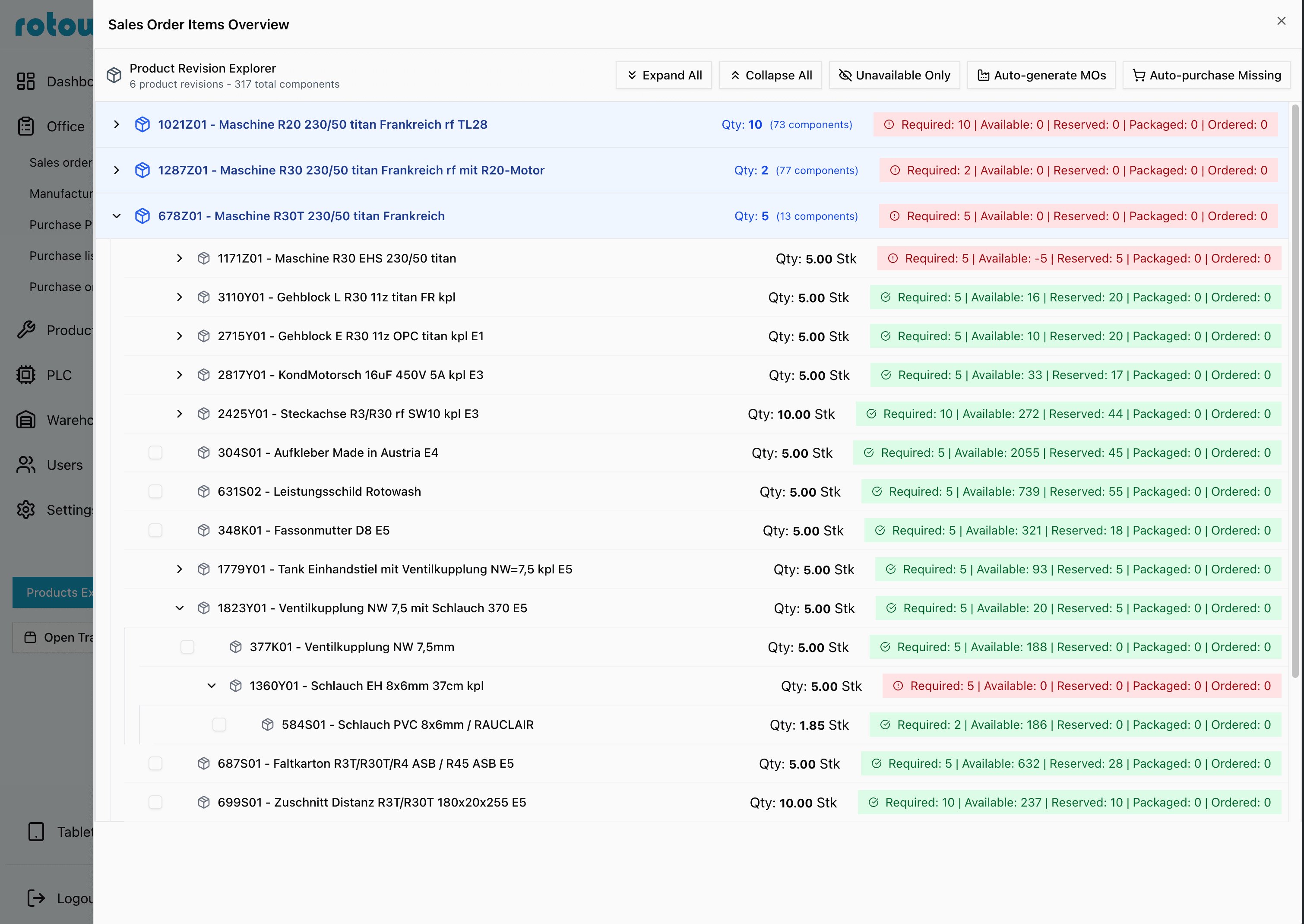
Rotowash machines have hundreds of components organized in multi-level BOMs. A single sales order can explode into 300+ parts across multiple product revisions. The system needs to track required vs. available vs. reserved quantities at every level and flag shortages instantly.
How we solved it:
We built a Product Revision Explorer that lets users expand full BOM trees, see real-time availability per component, auto-generate manufacturing orders for missing parts, and trigger auto-purchase for items that can't be produced in-house.
The Results
Here's what the finished platform delivers.
Impact
One Unified System
Sales, manufacturing, warehouse, and robot job dispatching all live in one platform — no more switching between disconnected tools.
Impact
Automated Warehouse
The robot interface layer dispatches warehouse jobs based on production demand — less manual handling, fewer errors.
Impact
Full Traceability
Every material transfer, production step, and inventory change is logged — giving Rotowash complete visibility into their operations.
Looking Forward
This project is a good example of what it takes to replace a legacy system end-to-end — not just rebuilding what existed, but rethinking how sales, production, and logistics connect. If your manufacturing operation is outgrowing its tools, we can help design and build what comes next.